Adaptive Capability

  • Home
  • Services
    • Net Zero Roadmap & Delivery
    • Climate Risk & Opportunity Assessment
    • Strategic Adaptation Consulting
    • Adaptation Business Case
    • Adaptive Capability Maturity Model
    • Adaptation Program Management
  • Resources
    • Useful Links
    • Glossary
  • News
    • Blog
    • Press Releases
  • About
    • Team
    • Clients
  • Contact Us
You are here: Home / Archives for Operational resilience

12 May 2015 By David McEwen

How resilient is your supply chain?

How resilient is your supply chain?With supply chains increasingly complex and global, it’s difficult to manage the risks effectively.

A recent Hepatitis A outbreak from frozen berries labelled as Australian but sourced from China shone a spotlight on several aspects of supply chain risk, predominantly product liability. Around the same time the 2015 FM Global Resilience Index prepared by Oxford Metrica showed Australia slipping 10 places since 2014, with perceived supply chain risks increasing markedly.

Supply chains are exposed to a wide variety of risks ranging from corruption, counterfeiting and safety concerns to the ethicality, sustainability and provenance of sourced products and, critically, the resilience of both producers and the logistics methods used to move goods. Customers depending on your products want to ensure they can obtain them when required, with consistent pricing, known quality and compliance with applicable standards and laws. However, business’ efforts to make supply chains lean (efficient and cost effective) may also compromise their resilience.

With many supply chains highly complex and spanning multiple borders, the risks are growing. It’s not sufficient simply to talk to your organisation’s direct suppliers. For example, Japan’s entire automotive industry was crippled following a relatively minor 2007 earthquake in Kashiwazaki in Niigata Prefecture after a single specialised supplier that produced piston rings for every brand – some seven layers down the supply chain – was knocked out. In that classic case of concentration risk the impact was limited to about a week as the industry rallied to help this critical supplier recover their operations, but it’s not always that simple.

Information Technology giant Hewlett Packard was not immune when floods ravaged Thailand in 2011/12, knocking out key suppliers’ manufacturing facilities, causing production delays and a reported 20% spike in input costs. While most organisations’ enterprise risk assessment processes consider the impacts of a loss of a key supplier, in many cases the analysis of supply chain risks is relatively superficial. Unless an organisation has considerable buying power it may be difficult to implement cost effective risk treatment measures.

The effects of a changing global climate are beginning to exacerbate supply chain resilience risks in the following direct ways:

  • Extreme weather events are becoming more frequent and/or intense in many regions. Depending on the area this may include devastating storms, flooding rains, droughts and heat waves, the latter also triggering bush fires.
  • Many coastal areas are exposed to storm surges, the impact of which is being magnified by higher wind speeds and rising sea levels.
  • The overall warming of the atmosphere and oceans is increasing average temperatures and changing rainfall patters, affecting agricultural and forestry production.
  • Marine food supplies are also under threat as a lot of the excess carbon dioxide being emitted into the atmosphere from the burning of fossil fuels (coal, oil and gas) dissolves into sea water and forms carbonic acid, increasing acidity and threatening krill and other crustaceans at the bottom of the food chain.

Some countries are significantly more exposed to these impacts than others given their geography and economic capacity to adapt their infrastructure accordingly.

Costs may also increase if the jurisdictions within which suppliers operate impose new regulations or taxes. Carbon taxes are a current case in point, and for products that are energy intensive or whose production results in other forms of greenhouse gas emissions, their imposition could materially affect pricing. If alternate suppliers exist whose goods are not subject to such taxes, their pricing could become preferential. The same goes for water intensive industries in regions where supplies are in decline.

In another case, food suppliers already grapple with periodic droughts and storms that cause supply shortages and consequent price hikes. Retail prices for bananas, for example, have soared over 500% in the months following several recent Queensland cyclones.

And paying a closer eye to local conditions can also pay dividends for a range of businesses whose demand and product range is correlated to the weather. This includes categories such as fashion, gardening and even fast food. As local climates change this will in turn affect longer term product range and market geography decisions.

Meanwhile, responding to changing consumer sentiment regarding climate change and environmental protection, corporate, government and individual purchasers are increasingly interested in ensuring that the products they consume are sourced and produced in ways that minimise their environmental impact.

To inform purchasers and provide product differentiation, a sub-industry of so-called “eco-label” schemes has sprung up in the past decade or two. There are currently over 450 such labels covering dozens of categories and thousands of products, on top of existing labels for quality management, food nutrition, standards compliance and so on.

The problem is that the quality of such schemes varies considerably and even corporate procurement professionals are often bamboozled by the sheer range of environmental certifications. Some only cover a fairly narrow aspect of environmental impact, some may cover a particular stage of processing but not the full supply chain or lifecycle impact, some lack independent assessment or verification, while others are little more than marketing fluff. Notwithstanding that in many cases corporate purchasers don’t prioritise environmental considerations in their product evaluation process to the extent that it has a material influence on supplier decision-making.
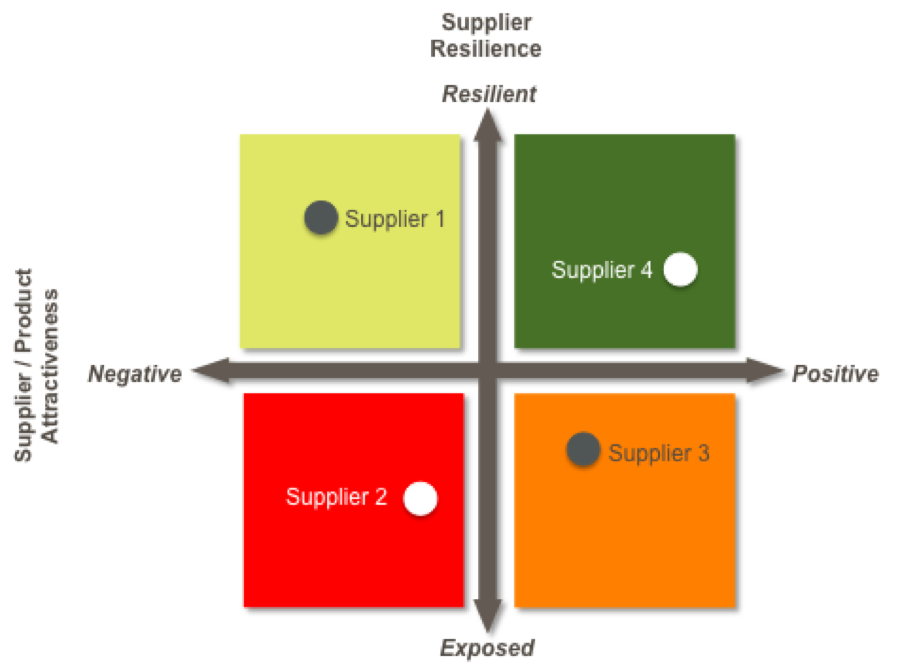
Supply Chain Risk Heat Map

At Adaptive Capability we specialise in helping businesses manage risks and capture opportunities arising from the manifold emerging impacts of a changing climate and other macro-environmental issues. Our risk assessment process helps our clients assess multiple levels of risk and opportunity across existing suppliers or as part of selection processes. Benefits include:

  • improved supply chain resilience;
  • reduced cost variability;
  • better control of reputational risk;
  • a more sustainable supply chain; and
  • increased market attractiveness of your products or services.

Talk to Adaptive Capability to enhance and safeguard your business.

Filed Under: Climate Change Adaptation, Operational resilience, Risk management, Supply Chain

22 April 2015 By David McEwen

Healthcare to feel the Heat

Healthcare to Feel the HeatWith growing evidence that our climate is changing, we predict the key health challenges arising from a warmer climate:

  • Heat related illnesses and mortality from exposure to extreme temperatures. This will particularly impact on people who work outdoors or in non-air conditioned environments, plus infants, older people, the ill and obsese, who are more susceptible to heat stress and dehydration. Heatwaves are already a leading cause of death compared to other types of natural disasters (particularly in developed nations where preparedness levels for violent storms and earthquakes generally lead to significantly fewer fatalities than those affecting developing nations). For example, excess mortality of up to 70,000 people was associated with the severe European heatwave of 2003. More broadly, higher temperatures may also provide excuses for some people to exercise less, potentially increasing rates of health conditions associated with a more sedentary lifestyle.
  • Water supply contamination during extreme precipitation and flood events.  Flooding in Brisbane in 2011 led to the temporary closure of one of the main water treatment plants as the incoming water was too muddy to be treated. On that occasion water supply interruptions were avoided on that occasion by re-routing supply from other treatment plants and implementing demand reduction strategies. However, there are likely to be increasing situations where extreme weather jeopardises fresh water supplies or people are otherwise forced to drink untreated water, potentially leading to a range of illnesses.
  • Exposure to flood waters and the after-effect of floods. It is not uncommon in many areas for sewage systems to overflow during significant flooding, raising infection rates. Receding flood-waters can become breeding grounds for mosquitos and other potentially harmful insects. Mould in buildings resulting from exposure to flood waters can in turn cause a variety of health conditions. And of course the murky and often fast moving water presents public safety issues for people unfortunate or unwary enough to find themselves trapped or engulfed.
  • A rise in the frequency and/or intensity of extreme weather events may also result in greater injuries / illnesses and demand for emergency services.
  • The spread of tropical, insect-borne diseases to areas in higher altitudes and higher latitudes as it becomes warmer.  Insect carriers of such diseases thrive in the tropics because it is warm overnight and all year round, meaning no die off in cooler months as is common in temperate climates. Meteorologists are already observing milder winters and warmer nights in many areas as the atmosphere retains more heat.
  • Additional health risks arise from the greater expected incidence of bush fires (not to mention an increase in lightning strikes). For example, during the summer of 2010 an estimated 55,000 people died in Russia from a combination of a severe heat wave and respiratory illnesses exacerbated by a resultant series of major bush fires.

Given these challenges, risks abound in the healthcare and public safety arena, but so do opportunities. Throw in our ageing and growing population plus the increase in non-communicable diseases and it seems that growth in demand for healthcare services is assured, though affordability may be a key consideration given reduced public sector capacity.

Key opportunities to reduce these impacts include:

  • Prevention:
    • training and education of at risk groups;
    • risk assessments;
    • preventative pharmaceuticals and related interventions;
    • water purification;
    • waste water infrastructure;
    • specialist clothing;
    • air filtration and cooling systems;
    • personal and networked health monitoring technologies;
    • other hazard reduction.
  • Relief:
    • increasing demand for existing and new drugs and forms of treatment for conditions related to heat, water contamination and tropical diseases and other exposures.
  • Health Infrastructure:
    • increasing demand for health professionals and emergency workers;
    • associated infrastructure, hospital beds;
    • education;
    • hospitals located in regions exposed to extreme weather will need to be made more resilient.
  • Sustainability:
    • sustainable medical procurement;
    • medical waste recycling;
    • energy and water efficiency improvements in medical practice;
    • other technologies and innovations to reduce environmental impact of healthcare.

On the flip side, there are a number of significant health benefits associated with a switch from fossil fuel dominated energy systems to renewables, principally a likely reduction in a range of respiratory illnesses given reduced particulate matter pollution. Given a warming climate, less severe winters in some regions may also reduce cold-related morbidity.

Adaptive Capability assists businesses in and servicing the healthcare sector to assess the risks and opportunities arising from climate change and environmental issues. We help our clients position their businesses to capture sustainable growth over the medium to long term. Our unique diagnostic tool, the AdaptiveCMM, baselines your organisation’s capabilities and delivers a roadmap of initiatives to control risks and identify new or enhanced revenue streams.

Talk to Adaptive Capability today to future proof your business.

Image credit: Rob Bayer/ShutterStock

Filed Under: Governance, Healthcare, Operational resilience, Risk assessment, Risk management, Strategic Adaptation

29 May 2014 By David McEwen

Operational resilience – what a changing climate does to your risk profile

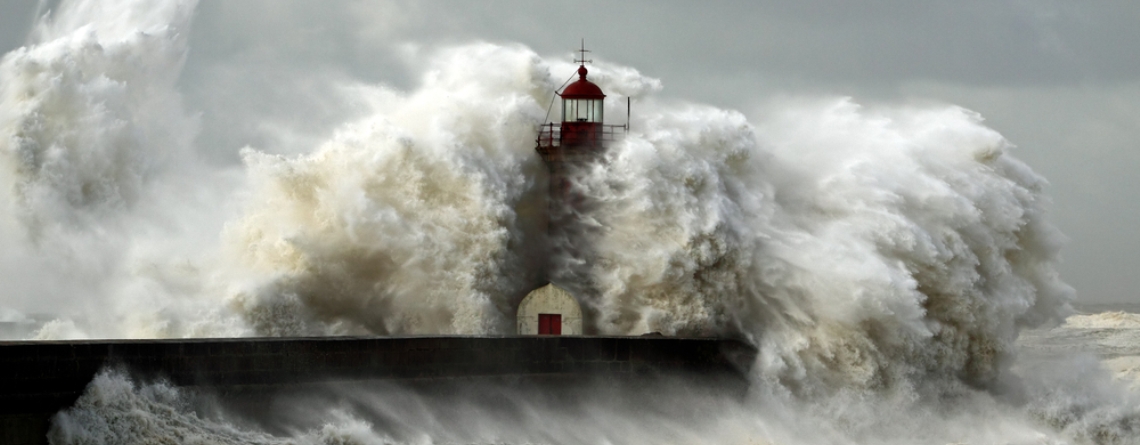
Lighthouse Storm - croppedThe field of enterprise risk management involves identifying and classifying hazards according to their likelihood of occurrence and the level of impact to the organisation should they occur. This yields a matrix view of risks, with differing treatment or control approaches depending on which quadrant they fall into. These approaches include acceptance (of low probability, low impact risks) and controls that reduce either the likelihood of occurrence or level of impact.

Risk transfer mechanisms such as insurance have also been a mainstay of organisations’ risk mitigation strategies. Insurance coverage is often effective for risks where the main impact is financial loss and the inherent likelihood of the risk is low and unpredictable.

Meanwhile, business continuity planning has traditionally focused on lower probability / higher impact contingencies that can’t easily be treated with other mechanisms, but is always complemented by insurance.

Add climate change into the mix and the scenario changes. The scientific consensus is that our atmosphere and oceans are warming due to the sharply increasing concentration of greenhouse gases (which have increased by over 25% since consistent record keeping began a mere 50 odd years ago). A range of human activities are blamed for this incredibly sudden rise including the burning of fossil fuels (chiefly coal, oil and gas), emissions of various other greenhouse gases used in industrial and manufacturing processes, deforestation and other deleterious changes in land use.

Climatic changes are lagging the build up of GHGs but we are already starting to see noticeable increases in the frequency and severity of extreme weather events such as storms, heat waves, droughts and so on. Global mean sea levels are also on the rise, while water supplies and other critical infrastructures are looking increasingly fragile. Ocean acidification from atmospheric GHGs dissolving in sea water and a range of other impacts are adversely affecting eco systems that currently feed billions of people.

The US National Climate Assessment Report released earlier this month puts it bluntly: “Climate change, once considered an issue for a distant future, has moved firmly into the present”.

Global reinsurers’ data tells the story starkly with record numbers of disaster events and (inflation adjusted) damage bills in the last decade.

It is only a matter of time before this becomes unsustainable and the insurance industry moves to deny – or make unaffordable – cover for events that are increasingly likely and predictable as a consequence of climate change. Indeed, in many parts of the world insurance premiums have risen at well beyond the pace of inflation over the last decade.

Operational resilience and business continuity planning in a world without affordable or effective insurance cover suddenly takes on a whole new dimension of strategic importance.

Talk to Adaptive Capability today about safeguarding your business’ future.

Filed Under: Climate Change Adaptation, Climate Change Mitigation, Insurance, Operational resilience, Risk management

Recent Posts

  • Mandatory Climate Disclosure is Coming – Are You Ready?
  • The Biggest Part of Achieving Net Zero Could be the Hardest
  • Climate of Care. A New Risk for Corporate Australia
  • Getting Off Gas – Commercial Buildings
  • Getting Off Gas

Search

Connect with us

Contact Details

Adaptive Capability
L20, Darling Park Tower 2
201 Sussex St
Sydney, NSW 2000
Australia
1800 CAPABLE (1800 227 225)

info@adaptcap.com

Memberships

Join the conversation

Tweets by @AdaptCap

Copyright Adaptive Capability © 2026 All Rights Reserved